Designing Biological Autonomy for Orbital Habitats – Inflatable Controlled Ecological Life Support System (ICELSS)
A Controlled Ecological Life Support System couples biological and physicochemical processes to facilitate resource regeneration, thereby minimising dependence on Earth-based resupply during long-duration missions. Despite decades of flight heritage and ground analogue missions, operational deployment remains at a conceptual stage. Low Earth Orbit implementations are restricted to modest rigid chambers measuring in centimetres, whereas viable partially closed loops necessitate square metres of growing area per individual alongside balanced system flows. Taking resupply autonomy as a foundational criterion, this paper argues that bioregenerative architecture must optimise cultivation area arrangement, crop productivity, and crew habitat quality. Applying these principles, the geometry of an Inflatable Controlled Ecological Life Support System module is derived from the cultivation demand of the crop portfolio and constrained by the SpaceX Starship payload envelope. The module layout allocates around 19 m2 of cultivation area per crew member across seven distinct groups sharing compatible environmental requirements. The inflatable module architecture proposes four functional variations, each applicable to an envisioned mission scenario, while contributing to psychological well-being by enabling human-plant interactions. In its deployed state, the module consists of four main sectors: (1.) cultivation, (2.) monitoring, (3.) processing, and (4.) waste management and a supplemental Environmental Control and Life Support System. Quantitatively, the resulting module approximately halves terrestrial resupply mass and covers over 40% of caloric demand, and closes the carbon loop through biomass recycling, while oxygen closure requires water electrolysis, with complete mass and power budgets following from the resulting geometry. Comparative benchmarking against literature indicates that substantial dietary and metabolic closure is predominantly driven by high-yielding species that simultaneously impose the steepest penalties on supporting infrastructure and design iteration.
Keywords: orbital greenhouse, inflatable module, crop-derived geometry, life support system, partial closure
Paper IAC-26,A1,7,9,x105938, accepted for oral presentation at the 77th International Astronautical Congress, Antalya, 5–9 October 2026.
| Venue | Antalya, Turkey |
| Year | 2026 |
| Authors | Luka Pejic, Sandra Häuplik-Meusburger |
| Institution | TU Wien |
| Document type | Conference paper, manuscript |
| Paper | IAC-26,A1,7,9,x105938 |
| Session | IAF/IAA Space Life Sciences Symposium (A1), Life Support, Habitats and EVA Systems (7) |
| Pages | 16 |
| Topic | Biologically based life support |
Cite this
APA
BibTeX
Cross-referenced sheets
-
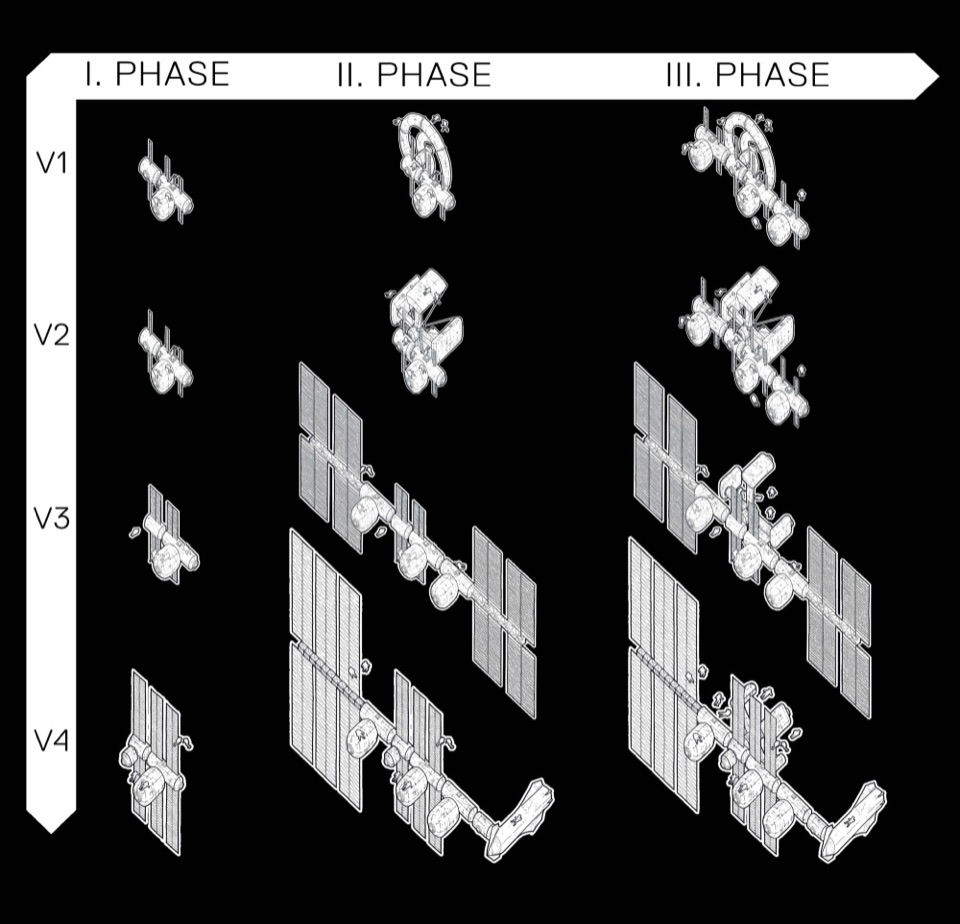 Promethea Station
A successor to the ISS, built to validate artificial gravity and closed-loop life support.
-
 Promethea Station — 24th IAA Humans in Space Symposium
A presentation of Promethea Station at the 24th IAA Humans in Space Symposium.
-
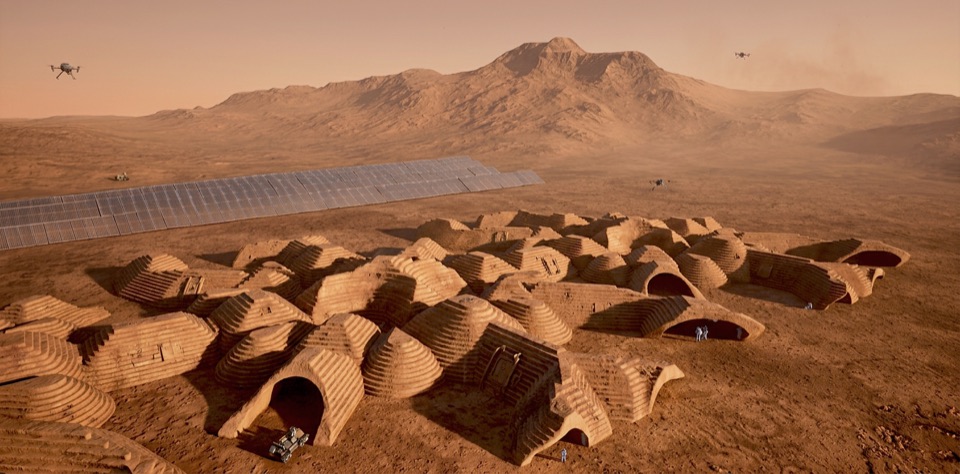 Eyes of Eden
A self-sustaining modular habitat for human settlement and food production on Mars.